

The best time to visit Greece is late April through May and September through mid-October. During these weeks, daytime temperatures sit in the comfortable 70s and 80s°F. Flights and hotel taxes cost less. Ferries run on full schedules, and the islands feel open and relaxed instead of packed.
But Greece welcomed about 36 million international visitors in 2024, and the country has changed fast since then. A guide written even two years ago will not warn you about three things that can wreck a 2026 trip: the Acropolis now shuts down at midday during summer heatwaves, strong summer winds regularly cancel ferries between islands, and Santorini has tightened its daily cruise-ship limits even further this year. Skip these details and you risk standing outside a locked gate in 100°F heat or missing your connecting ferry.
Quick-skim cheat sheet:
- Best overall: May and September
- Best for swimming without wind hassles: Early June and September
- Cheapest window: November through March
- Months to avoid for sightseeing: July and August
The Best Time to Visit Greece: Why Late Spring and Early Fall Win
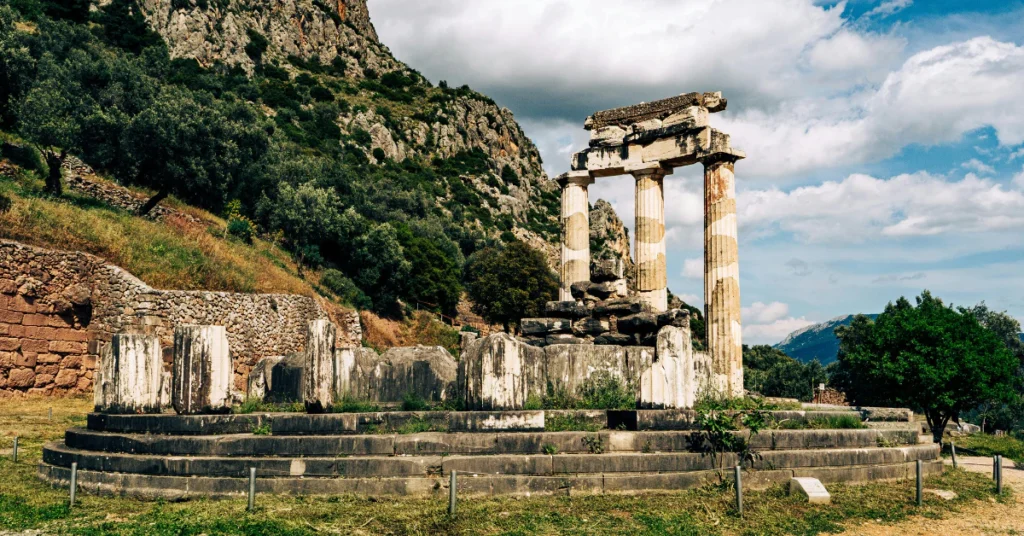
Spring Shoulder Season (Late April to May): Wildflowers and Sightseeing
May is the sweet spot for most first-time visitors. Athens averages a high of 77°F and a low of 59°F, which is warm enough for a t-shirt but cool enough to walk for hours without wilting.
This is the best window for ruins, hikes, and long walks through Athens. You can explore the Acropolis at midday without worrying about a heat closure, and trails are lined with wildflowers instead of dust.
Here is the trade-off. The sea has not caught up to the air yet. If your main goal is swimming, May can feel a little brisk, especially in the Aegean. Sightseeing lovers will be thrilled. Beach lovers should read on.
Fall Shoulder Season (September to October): Warm Seas and Golden Light
September flips the script. Athens averages 83°F during the day and 66°F at night, and the sea is still holding onto months of summer heat. This is the best month for swimming without the crowds or prices of July and August.
October cools things down to 73°F/59°F, which makes it a great month for sightseeing but a mixed bag for beach time depending on the island.
If you are searching for the best time to visit Greece in October, split the month in two. The first two weeks still carry warm, swimmable seas and mild days, almost like a quieter September. Late October is better suited to travelers who want cool, comfortable sightseeing weather and do not mind if beach days are off the table.
The Shoulder-Season Trap Nobody Warns You About
Here is something most guides skip. “Shoulder season” does not mean the same thing on every island.
Athens and Crete run on a longer calendar because they get steady visitors all year. Smaller islands do not. Many small-island hotels, tavernas, and even ferry routes stay closed through early April and do not fully open until later in the month, sometimes not until May.
The same thing happens in reverse each fall. By mid-October, some smaller islands start shutting down for the season, weeks before Athens even slows down.
If you are planning a trip built entirely around one small, quiet island, treat early April and late October as riskier bets. Athens, Crete, and the bigger islands are safer choices if you want to travel right at the edge of the season.
The Worst Time to Visit Greece (Why July and August Backfire)
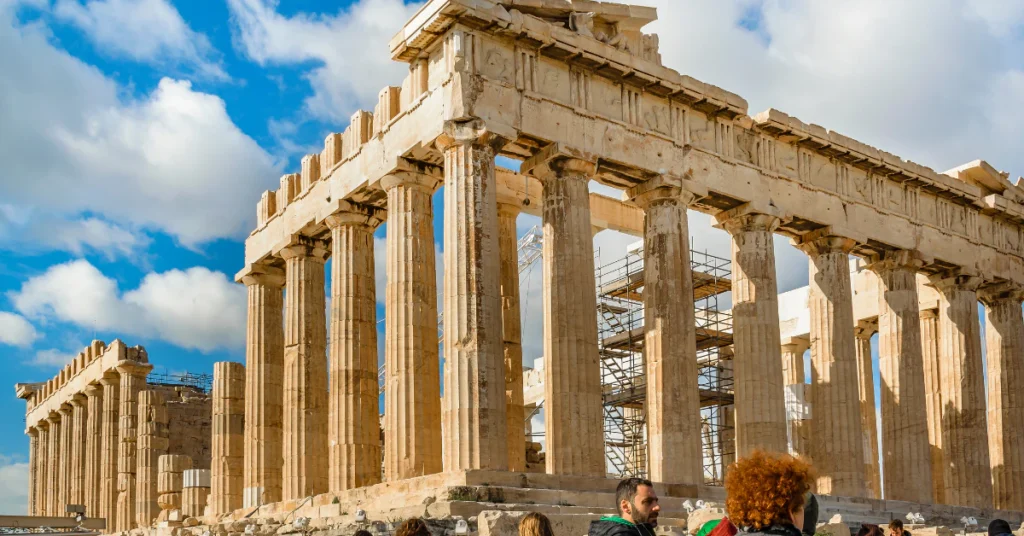
Extreme Heatwaves and Wildfire Risk
If you are wondering about the worst time to visit Greece, July and August top the list for most travelers. Athens averages a high of 91°F and a low of 73°F during these months, but “average” hides the real danger. Temperatures regularly spike past 100°F (39 to 40°C or higher).
The U.S. State Department’s travel advisory for Greece warns of exactly this. It flags wildfire risk from April through October, with the highest danger in southern Greece and the islands, and notes that heatwaves above 100°F can trigger health warnings and site closures. This is the same heat that shuts down the Acropolis at midday, as covered earlier in this guide.
Add in peak crowds and peak prices, and July and August become the hardest months to enjoy Greece comfortably, no matter how much you plan ahead.
The Meltemi Wind: The Ferry-Killer Competitors Never Mention
Most travel guides never mention the word Meltemi. That is a problem, because it can quietly ruin a summer trip.
The Meltemi is a strong, dry wind that blows south across the Aegean Sea, the Cyclades, and the Dodecanese from June through September. It peaks in July and August, reaching 7 to 8 on the Beaufort scale, with gusts up to 120 km/h (about 75 mph).
Here is what that means for your trip. Ferries between islands get delayed or cancelled outright when the wind picks up, sometimes with little warning. Beaches that face north can turn unpleasant fast, with wind whipping sand across your towel and choppy water replacing calm swimming conditions.
If you are island-hopping in the Cyclades or Dodecanese during peak summer, build slack into your schedule. A cancelled ferry can turn a one-day trip into a two-day delay.
Two fixes make a real difference:
- Choose the Ionian islands instead. Corfu, Zakynthos, and Kefalonia sit on the other side of the country and are largely sheltered from the Meltemi. You still get summer sun and swimming, without the wind risk.
- Book a buffer night in Athens before you fly home. If your trip ends with an island ferry back to the mainland, do not schedule it for the same day as your flight. A one-night cushion in Athens means a cancelled ferry costs you an inconvenience, not a missed flight.
Best Time to Visit Athens and the Mainland (Beating Acropolis Heat Closures)
The Acropolis Midday Closure Rule and Timed-Entry Slots
For most travelers, the best time to visit Greece’s Athens sights is spring (April to May), fall (September to November), or even mild winter days. City sightseeing does not depend on warm sea water, so you get to skip the summer heat entirely and still enjoy full opening hours.
Summer visitors need to know one rule that most guides skip entirely. Since 2023 to 2024, Greece’s Culture Ministry has closed the Acropolis archaeological site (not the on-site museum) from roughly 12:00 p.m. to 5:00 p.m. whenever forecast temperatures hit 39 to 40°C (102 to 104°F) or higher. These closures are announced the day before or even the same morning, so you cannot plan around them weeks in advance. You can only plan to avoid the risk.
On top of that, the Acropolis now uses a timed-entry system introduced in 2024, capping visitors at 20,000 per day across hourly slots. In summer, the site is open from 8:00 a.m. to 8:00 p.m., with last entry at 7:00 or 7:30 p.m. A standard adult ticket costs €30, or €36 for a combined ticket covering six other ancient sites.
If you are visiting in July or August, book the 8:00 a.m. to 9:30 a.m. slot, or go late in the afternoon after 5:00 p.m. Both windows dodge the worst heat and lower your odds of running into a midday closure.
Mainland Sightseeing: Delphi, Meteora, and Mt. Olympus
The same spring and fall logic applies across the mainland. The Archaeological Site of Delphi and the cliffside monasteries at Meteora both involve walking across exposed stone with little shade, so March to May and September to November keep the heat manageable.
Mt. Olympus works differently. Its higher elevation keeps summer hikes cooler than the lowlands, making summer and early fall the better window for reaching its trails, once the lower valleys have already turned uncomfortably hot.
Best Time for Greek Islands, Santorini, and Cruises (2026 Port Rules)
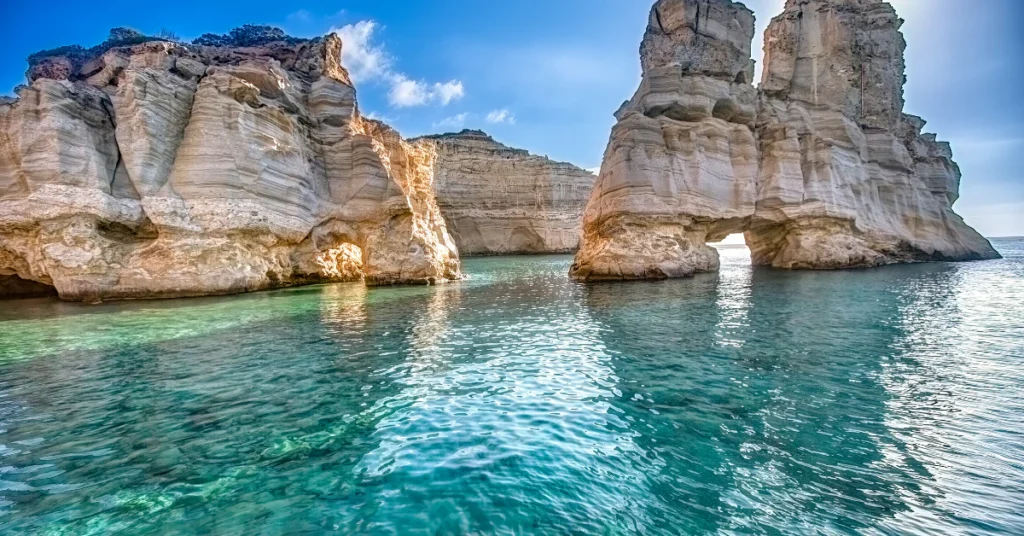
Santorini’s Tighter 2026 Cruise Cap Explained
If you are asking about the best time to go to Greece Santorini, timing your visit around the crowds matters just as much as timing it around the weather.
Santorini used to let in as many as 17,000 cruise passengers on its busiest pre-cap days. One single day topped 11,000 arrivals and sparked real frustration among locals, who felt the island could not handle that many visitors at once. In response, Santorini introduced an 8,000 passengers per day cap starting in 2025.
For 2026, the rule gets stricter. The Port of Athinios in Santorini now calculates ship capacity using 100% occupancy math, instead of the 80% assumption used in 2025. In plain terms, fewer ships qualify to dock on any given day, which means longer waits for the tender boats that ferry passengers from ship to shore.
If you are planning the best time to visit Greece on a cruise, aim for late April to May or late September to October. Ports are calmer, tender lines move faster, and you can actually enjoy sunset in Oia, Santorini instead of shuffling through a crowd to get a photo.
Best Islands to Visit in 2026 (And When to Go)
If your travel dates are locked into June through September, Santorini and Mykonos are not your only options, and they may not even be your best ones.
Naxos was voted the #1 island in Europe in the Condé Nast Traveller UK Readers’ Choice Awards 2025, scoring 95.71 out of 100. It beat out Crete (#8), Corfu (#10), Rhodes (#11), Mykonos (#14), and even Santorini (#18).
Travel+Leisure’s 2026 World’s Best Awards named Milos, Crete, and Paros among the top 25 islands in the entire world, not just Europe.
For 2026, Condé Nast Traveller also spotlighted a set of quieter, less crowded picks: Sifnos, Syros, Folegandros, Kefalonia, and Hydra. These islands offer the same turquoise water and whitewashed charm as the famous names, without the tender-boat lines or the overtourism headaches.
If summer is your only option, building your itinerary around one of these islands instead of Santorini alone can make your trip feel far less rushed.
Visiting Greece in Late Fall and Winter (November to March Guide)
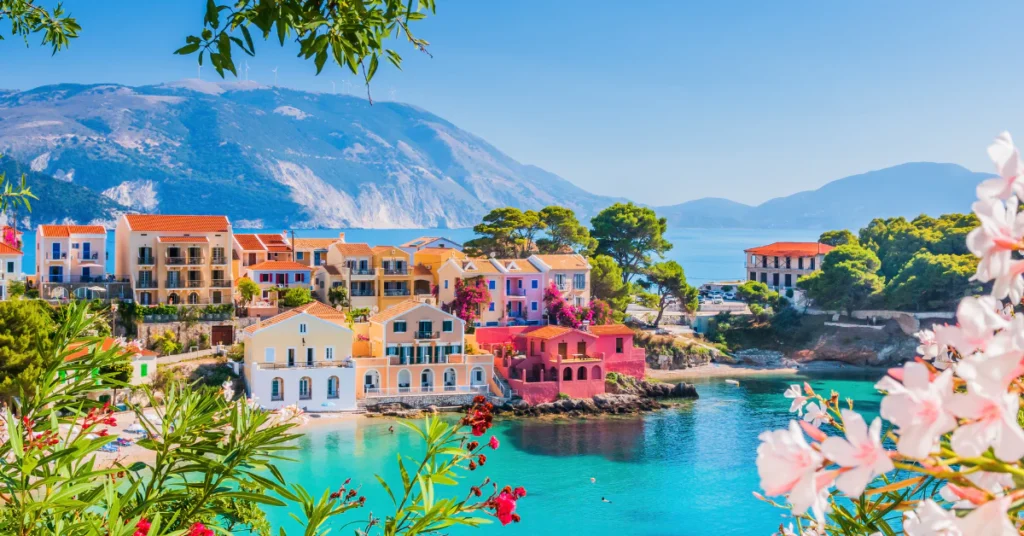
Greece in November: Olive Harvests, Empty Ruins, and Mild City Days
If you’re weighing the best time to visit Greece in November, think of it as a trade. You give up beach days in exchange for empty ruins and mild, walkable weather.
Athens still works beautifully in November. Days stay mild enough for comfortable sightseeing, and major museums and the Acropolis see far fewer visitors than in summer, so you can actually take your time. Crete’s southern coast also holds onto warmth longer than the rest of the country, making it one of the few islands still worth a beach-adjacent trip this late in the year.
What does not work in November is a classic island-hopping beach trip. Smaller island resorts start closing for the season, and you will notice far fewer options for dining and lodging outside the bigger islands.
Greece in December to March: Festive Athens and Mainland Escapes
For travelers asking about the best time to visit Greece in December, the honest answer is that it depends on what kind of trip you want. Athens in December averages a high of 57°F and a low of 45°F. January runs slightly cooler, averaging 55°F and 42°F.
Location changes this picture a lot. Crete and the southern islands stay several degrees warmer than Athens all winter. Northern mainland cities like Thessaloniki run several degrees cooler, and can feel properly cold by comparison.
Here is the trade-off to accept going in. From November through March, most beach hotels and restaurants on smaller islands shut down completely. Ferry schedules shrink down to bare-bones routes that mainly serve local residents, not tourists hopping between islands for fun.
This window is best suited to a specific kind of trip: a line-free cultural visit to Athens, a mainland road trip through Delphi and Meteora, or a slower-paced stay on larger, year-round islands like Crete or Syros, where local life continues no matter the season.
Best Time to Visit by Traveler Type: Honeymoons vs. Budget Trips
Best Time to Visit Greece for a Honeymoon
For the best time to visit Greece for a honeymoon, aim for late May through mid-June or September. The sea is warm enough for swimming, boutique hotels and cliffside suites are open and fully staffed, and sunsets feel calm and romantic instead of crowded.
You also dodge two honeymoon-killers by picking these months. You skip the packed, overpriced chaos of August, and you skip the Meltemi wind season at its worst, so your ferry between islands is far less likely to get cancelled on the one week you cannot afford delays.
Best Time for Budget Travelers: The 4x Hotel Tax Swing and US Flight Bands
Budget planning in Greece comes down to one number most guides never mention: the Climate Resilience Fee. This is a nightly, per-room hotel tax added to your bill at check-out, and it catches a lot of travelers by surprise.
The gap between peak and off-peak rates is bigger than most people expect. Here is the breakdown, revised as of January 2025:
| Hotel Type | Peak (April to October) | Off-Peak (November to March) |
| 1-2 star | €2/night | €0.50/night |
| 3 star | €5/night | €1.50/night |
| 4 star | €10/night | (lower off-peak) |
| 5 star / villas | €15/night | €4/night |
That is close to a 4x jump in some categories, just based on when you book.
Flights follow a similar pattern. Round-trip fares from the US typically run $350 to $650 in shoulder season, compared to $700 to $1,200 or more in summer. From New York (JFK), expect roughly $350 to $500 in shoulder season versus $700 to $1,100 in summer. From Chicago (ORD), it is closer to $480 to $650 versus $800 to $1,200. February and September have trended as the cheapest months to book the JFK to Athens route. You can compare current fares yourself and check official entry rules at Visit Greece, the country’s official tourism site.
Quick-Scan Table by Traveler Style
| Traveler Type | Best Months |
| Honeymooners | Late May to mid-June, or September |
| Cruisers | Late April to May, or late September to October |
| Budget Travelers | November to March |
| Athens Sightseers | April to May, or September to November |
Greece Month-by-Month Weather, Crowds, and Price Calendar
Here is a quick snapshot of the year in Athens, using verified temperatures where we have them and general seasonal patterns for the rest.
| Month | Athens Avg High/Low | Crowd Level | Hotel Tax Tier | Best For |
| January | 55°F / 42°F | Low | Off-Peak | Budget city trips |
| February to April | Cool, warming up | Low to Moderate | Off-Peak (through March) | Early sightseeing, cheap flights |
| May | 77°F / 59°F | Moderate | Peak | Ruins, hiking, wildflowers |
| June | Warm, rising toward summer | High | Peak | Islands (watch for early Meltemi) |
| July | 91°F / 73°F | Very High | Peak | Avoid if possible (heat, wind, crowds) |
| August | Very hot, similar to July | Very High | Peak | Avoid if possible (heat, wind, crowds) |
| September | 83°F / 66°F | Moderate to High | Peak | Swimming, cruises, honeymoons |
| October | 73°F / 59°F | Moderate | Peak (through Oct) | Sightseeing, early-month swimming |
| November | Cooling down | Low | Off-Peak | Athens, Crete, mainland |
| December | 57°F / 45°F | Low | Off-Peak | Festive Athens, mainland trips |
Keep in mind this table uses Athens as the baseline, and the rest of Greece does not match it exactly. Crete and the southern islands run several degrees warmer than Athens all year, which is why Crete can still offer decent beach weather in November when other islands have already cooled off. Northern mainland areas like Thessaloniki run several degrees cooler, especially in winter. And during the July and August Meltemi season, the Ionian islands stay noticeably calmer than the Aegean side of the country, which is worth remembering when the table above shows “avoid if possible.”
2026 Entry Rules, Strike Dates, and Safety Tips Before You Book
US Passport, Visa, and Q4 2026 ETIAS Rules
US citizens do not need a visa for tourist stays of 90 days or less in Greece. Your passport just needs to stay valid for at least 3 months past your planned departure date.
One more thing to watch: the EU’s new ETIAS travel authorization, required for visa-exempt travelers like Americans, has been delayed again and is now expected sometime in Q4 2026, with a fee of roughly €20. No exact launch date has been confirmed yet, so ignore any site claiming otherwise.
Protest Dates and Transport Risks to Circle on Your Calendar
Per the U.S. State Department’s Level 1 advisory (issued October 23, 2025), the safest official guidance available, demonstrations and strikes can disrupt ferries, flights, and metro service with little warning. A few dates see this happen almost every year: February 28, May 1, November 17, and December 6. Avoid booking a tight ferry-to-flight connection on any of these.
Watch for pickpockets on the Athens metro, and skip moped rentals if you are not an experienced rider, since Greece has one of the higher traffic fatality rates in the EU. Same-sex marriage has been legal in Greece since 2024. For emergencies, the U.S. Embassy Athens is located at 91 Vasilisis Sophias Avenue, 10160 Athens. You can review the full advisory anytime at travel.state.gov.
Frequently Asked Questions About When to Visit Greece
What is the cheapest time to go to Greece?
November through March is cheapest. A 5-star hotel’s nightly Climate Resilience Fee drops from €15 to €4. Flights fall to $350 to $600, versus $700 to $1,200+ in summer. February and September trend cheapest for booking. Trade-off: many island hotels and restaurants close for the season.
What is the temperature in Greece by month?
Athens averages: January 55°F/42°F, May 77°F/59°F, July and August 91°F/73°F, September 83°F/66°F, October 73°F/59°F, and December 57°F/45°F. Crete and the southern islands run several degrees warmer year-round, while Thessaloniki and the north run noticeably cooler, especially in winter.
What is the nicest Greek island to go to?
Naxos was voted #1 in Europe by Condé Nast Traveller UK’s Readers’ Choice Awards 2025, scoring 95.71, ahead of Crete, Corfu, Rhodes, Mykonos, and Santorini. For 2026, Condé Nast Traveller also highlights Paros and Sifnos, while Travel+Leisure’s World’s Best names Milos, Crete, and Paros among the top 25 islands worldwide.
Is it risky to travel to Greece right now?
No unusual risk. The U.S. State Department rates Greece Level 1, “Exercise Normal Precautions” (issued October 23, 2025), its lowest advisory tier. Greece also ranks 53rd of 163 countries on the 2026 Global Peace Index. Standard precautions apply: watch for metro pickpockets and check for transport strikes.
Is Greece friendly towards Americans?
Yes. Americans can enter visa-free for stays up to 90 days, and Greece holds the same Level 1 “Exercise Normal Precautions” advisory status as Switzerland and Japan. Nothing in official U.S. travel guidance suggests any unfriendliness or unusual barriers for American visitors specifically.
Which is safer, Greece or Italy?
On the 2026 Global Peace Index, Italy ranks 35th of 163 countries (score 1.712), noticeably ahead of Greece at 53rd (score 1.828), with lower scores meaning more peaceful. Still, both countries are considered very safe for everyday tourists, with low rates of violent crime against visitors.
Final Thoughts
Greece rewards travelers who plan around its calendar, not against it. Late spring and early fall give you the best mix of warm weather, open ferries, and manageable crowds, while summer’s heat, wind, and prices catch most first-timers off guard.
The details matter more in 2026 than they used to. A midday Acropolis closure, a cancelled Meltemi-season ferry, or a stricter Santorini cruise cap can reshape a trip if you don’t plan for them. But none of these are dealbreakers once you know they exist.
Pick your window based on what you actually want from the trip, whether that’s warm swimming water, quiet ruins, a budget-friendly getaway, or a romantic honeymoon, and Greece will deliver on it without the guesswork.