
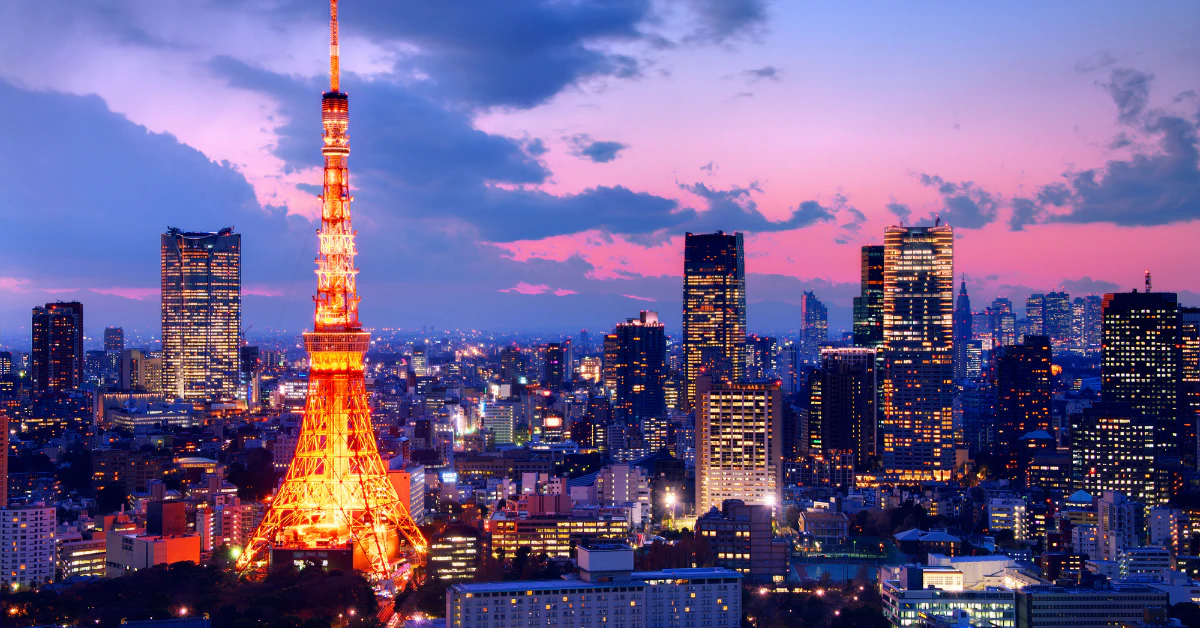
The best time to visit Tokyo is late May or October. These two windows give you mild weather, thinner crowds, and clear skies without the price spikes of cherry blossom season. If you want to see cherry blossoms, aim for late March, since Tokyo’s 2026 forecast points to first bloom around March 21 to 22, with full bloom around March 28 to 29. If you are watching your budget, February is your best bet. It is cold, but hotel prices and crowd sizes drop.
This guide breaks it all down. You will find a full month by month weather guide, tips for dodging crowds at Tokyo Disneyland and Tokyo Skytree, real numbers on what a Tokyo trip costs, and answers to the most common questions US travelers ask before booking.
The Best Time to Visit Tokyo for Ideal Weather

Tokyo has four real seasons, and each one feels very different. If you want to know the best time to visit Tokyo weather wise, it comes down to picking a season that matches what you can handle: heat, rain, cold, or mild air.
Summer (June to August) is hot and sticky. August is the hottest month. The average high hits 86°F, and the air stays thick with humidity. Walking around outdoors for hours in this heat can wear you out fast, especially if you are not used to it.
Rainy season starts in June. This month brings the most rainy days of the year, with rain falling on about 13 days. It is not a downpour every day, but you should pack a small umbrella and expect some indoor backup plans.
September is the wettest month overall. Even though June has more rainy days, September gets the most total rainfall, close to 7.3 inches. This is also typhoon season, so flights and trains can face delays. If your trip falls in September, keep your plans flexible and check weather updates often.
Winter (December to February) is cold and dry. January is the coldest month, with average lows around 38°F. The upside is clear skies and very little rain. If you do not mind bundling up, winter in Tokyo is calm and easy to walk around in.
Spring (March to May) and autumn (September to November) offer the most balance. Spring brings cherry blossoms and cool, comfortable air before the summer humidity sets in. Autumn cools back down after summer and typhoon season fades. Both seasons sit in that sweet spot between too hot and too cold.
Here is a quick snapshot to help you plan:
| Season | What to Expect | Best For |
| Summer (Jun-Aug) | Hot, humid, rainy start | Festivals, if you can handle heat |
| Rainy season (Jun) | Most rainy days (~13 per month) | Indoor sightseeing, museums |
| Typhoon season (Sep) | Heaviest rainfall (~7.3 in) | Flexible travelers only |
| Winter (Dec-Feb) | Cold, dry, clear skies | Budget trips, quiet sightseeing |
| Spring/Autumn | Mild, comfortable | Most travelers, best overall weather |
If you are picking dates based on weather alone, spring and autumn are your safest choices. You get comfortable temperatures without fighting heavy rain, extreme heat, or bitter cold. Summer works if you are prepared for humidity and the chance of typhoon delays. Winter works well if you prioritize low prices over warm weather.
When to Go to Avoid the Crowds (Dates to Skip)

If you want the best time to visit Tokyo to avoid crowds, the easiest trick is simple: know which weeks to skip. Japan has a few national holiday clusters where millions of people travel at once. Hotels fill up, trains sell out, and popular spots get packed.
Golden Week is the biggest one to watch. In 2027, Golden Week runs from Thursday, April 29 to Wednesday, May 5. This is a stretch of four national holidays bunched together, and it is one of the three busiest travel periods in Japan all year. If you plan to move between cities, like Tokyo to Kyoto, booking a Shinkansen ticket during this window can be tough. Seats sell out fast, especially on the days right before and after the holiday block.
Obon is the second major date to mark on your calendar. Obon 2027 falls between August 13 and 16. It is not an official public holiday, but most people treat it like one. Families travel to visit relatives and honor ancestors, which means trains and highways get crowded in the same way they do during Golden Week.
One more thing worth knowing: there is no Silver Week in 2027. Silver Week is a bonus holiday cluster that pops up some years in late September, but it only happens when the calendar lines up just right. It will not happen in 2027, so you get one less crowded week to plan around.
Here is the silver lining. If your trip only covers Tokyo, and you are not hopping between cities, Golden Week can actually work in your favor. Many Tokyo residents leave the city during this break to visit other parts of Japan. That means some neighborhoods feel noticeably quieter, even while the rest of the country is packed. The tradeoff is that major attractions like Tokyo Disneyland and Tokyo Skytree still draw visiting tourists, so expect those specific spots to stay busy no matter what.
The simplest rule: block out Golden Week (April 29 to May 5, 2027) and Obon (August 13 to 16, 2027) if you want to avoid peak domestic travel crowds. If you must travel during these windows, book your Shinkansen tickets and hotels as early as possible, since both sell out weeks in advance.
Timing Tokyo Disneyland & Skytree

Some attractions in Tokyo come with long lines no matter what. Knowing when to go can save you hours of standing around.
For the best time to visit Tokyo Disneyland, skip August. It is the most crowded month of the year at both Tokyo Disneyland and Tokyo DisneySea. Hot weather does not stop visitors, since school summer break pushes attendance to its peak.
July is the surprise winner. Even though it sits right before August, July is historically one of the quietest months at Tokyo Disney Resort. Based on crowd data tracked from 2020 to 2026, July ranks dead last out of all 12 months for average crowd size. If you want warm weather without the August rush, July is worth a closer look.
If you want the best time to visit Tokyo Disneyland least crowded, aim for mid-January to mid-February. This stretch comes right after the New Year holiday crowd clears out. Lines shrink, wait times drop, and you get a much more relaxed park experience. The tradeoff is colder weather, so dress warm.
Tokyo Skytree runs on a simpler schedule. The tower is open daily from 10:00 to 21:00. For the best time to visit Tokyo Skytree, two strategies work well depending on what you want.
If you want to dodge crowds, show up right at the 10:00 weekday opening. This is the calmest window of the day, before tour groups and after-work visitors arrive.
If you want the best photos, aim for 45 minutes to one hour before sunset. This window gives you soft light fading into the city skyline, followed by the lights turning on below. You can check the official Tokyo Skytree site for exact sunset-based ticket slots before you go.
Weekday mornings win for quiet. Pre-sunset evenings win for views. Pick based on what matters more to your trip.
The Cheapest Time to Visit (Budgeting for 2026/2027)

Timing your trip around money matters just as much as timing it around weather. If you are searching for the best time to visit Tokyo cheap, the answer is clear: mid-January through early March.
During these months, hotel prices drop and crowds thin out. Airlines also tend to offer better deals, since this stretch falls outside major Japanese holidays and outside the peak cherry blossom rush.
Here is what a typical day might cost you, thanks to a weak yen that currently stretches the US dollar further than it has in years:
| Travel Style | Daily Budget (USD) |
| Flashpacker (budget) | $70 to $100 |
| Mid-range | $150 to $250 |
These numbers cover food, local transport, and some activities. Flights and hotels are separate costs on top of this.
One important update if you are booking for late 2026 or 2027: Japan’s departure tax is going up. Right now it sits at 1,000 yen per person. Starting in July 2026, it jumps to 3,000 yen per person. This tax gets added when you leave the country, so it is easy to miss while budgeting. It is a small amount in the big picture, but worth factoring in if you are planning a trip for after that date.
Putting it together: if low prices matter more to you than warm weather or cherry blossoms, book your trip for January, February, or early March. You get the cheapest hotel rates, smaller crowds, and a daily budget that stretches further than most travelers expect.
Splitting Your Trip: Tokyo and Kyoto
Many first-time visitors ask about the best time to visit Tokyo and Kyoto together, since the two cities make a natural pairing. Tokyo gives you modern city life, while Kyoto gives you temples and traditional streets. A combined trip works well in any season that suits your weather preference, but there is a cost factor worth knowing before you book.
Starting March 1, 2026, Kyoto is raising its accommodation tax sharply. The new rates climb as high as 10,000 yen per person, per night, for hotels charging 100,000 yen or more. That is a tenfold jump from the current rate.
Tokyo’s accommodation tax stays much lower by comparison. Rooms under 10,000 yen per night stay completely tax-free in Tokyo. Higher-priced rooms only add around 200 yen per person, per night.
This gap matters if you are planning where to spend your money. If your trip includes a few nights in a higher-priced hotel, those nights will cost noticeably less in added tax if you book them in Tokyo instead of Kyoto. A simple strategy: keep your most expensive hotel nights in Tokyo, and treat Kyoto as a shorter, more budget-friendly stay, perhaps in a lower-tier room that avoids the highest tax bracket entirely.
This does not mean you should skip Kyoto. It just means a little planning around where you sleep can save you real money over a multi-city trip. Since both cities sit under three hours apart by Shinkansen, splitting your nights strategically between them is easy to do without losing travel time.
Frequently Asked Questions
Is $5,000 enough for a trip to Japan?
Yes. For one traveler, $5,000 is generally more than enough for a comfortable one to two week trip from the US. This covers flights, mid-range hotels, food, and activities, with room to spare for souvenirs or a few nicer meals.
What are the cheapest months to go to Tokyo?
Mid-January through early March. Hotel prices and crowd sizes both drop during this window, as covered in the budgeting section above.
How many days do you really need in Tokyo?
Plan for at least 3 to 5 days if this is your first visit. Three days covers the major highlights, but it feels rushed. Four to five days lets you slow down, explore different neighborhoods, and skip the feeling of constantly rushing to the next stop.
Is $10,000 enough for a week in Japan?
Yes, very comfortably. This budget sits at the high end of even luxury-level spending for one traveler over one week, so it covers upscale hotels, fine dining, and private tours with room to spare.
Is $100 USD a lot in Japan?
It goes a long way. $100 a day lands right in the budget to mid-range zone, covering food, local transport, and some activities without feeling tight.
Is Tylenol and Advil illegal in Japan?
Not the standard versions. Regular Tylenol, which contains acetaminophen, is legal and sold in Japanese drugstores. The real issue is cold and sinus formulas like Tylenol Cold or Advil Cold & Sinus. These contain pseudoephedrine, and any product with pseudoephedrine above a 10 percent concentration is treated as a controlled stimulant in Japan, even with a valid prescription. Pack plain pain relievers, and leave the multi-symptom cold medicine at home.
Why are sunglasses not popular in Japan?
It comes down to culture, not sun exposure. A pedestrian study in Tokyo found only 8.5 percent of men and 6.5 percent of women wearing sunglasses outdoors. Dark lenses carry a social association in Japan known as “iatsukan,” which roughly means an intimidating presence. Wearing sunglasses in everyday settings can feel like you are putting up a wall between yourself and others, which is not the norm there.
Are there any colors to avoid wearing in Japan?
Not for everyday sightseeing. This rule only applies to specific events. As a wedding guest, skip all-white or all-black outfits, or balance either one with colorful accessories. At a funeral, black is actually the expected color, not one to avoid. Outside of these two situations, there is no color rule tourists need to worry about.
Can you wear all black in Japan?
Yes, without any problem. All-black outfits are extremely common daily wear in Tokyo, for both locals and visitors. The only time to think twice is if you are attending a wedding as a guest, where all-black (or all-white) is considered bad etiquette unless you add some color.
Final Thoughts
Timing a Tokyo trip comes down to what matters most to you. Late May and October give you the best weather and lighter crowds. February saves you the most money. Avoiding Golden Week and Obon keeps you away from the worst of the domestic travel rush. Whatever month you pick, a little planning around dates, budget, and local customs goes a long way toward a smoother trip.


